
IEEE-1588 PTP Grandmaster - DTS 4160

IEEE-1588 PTP Grandmaster - DTS 4160

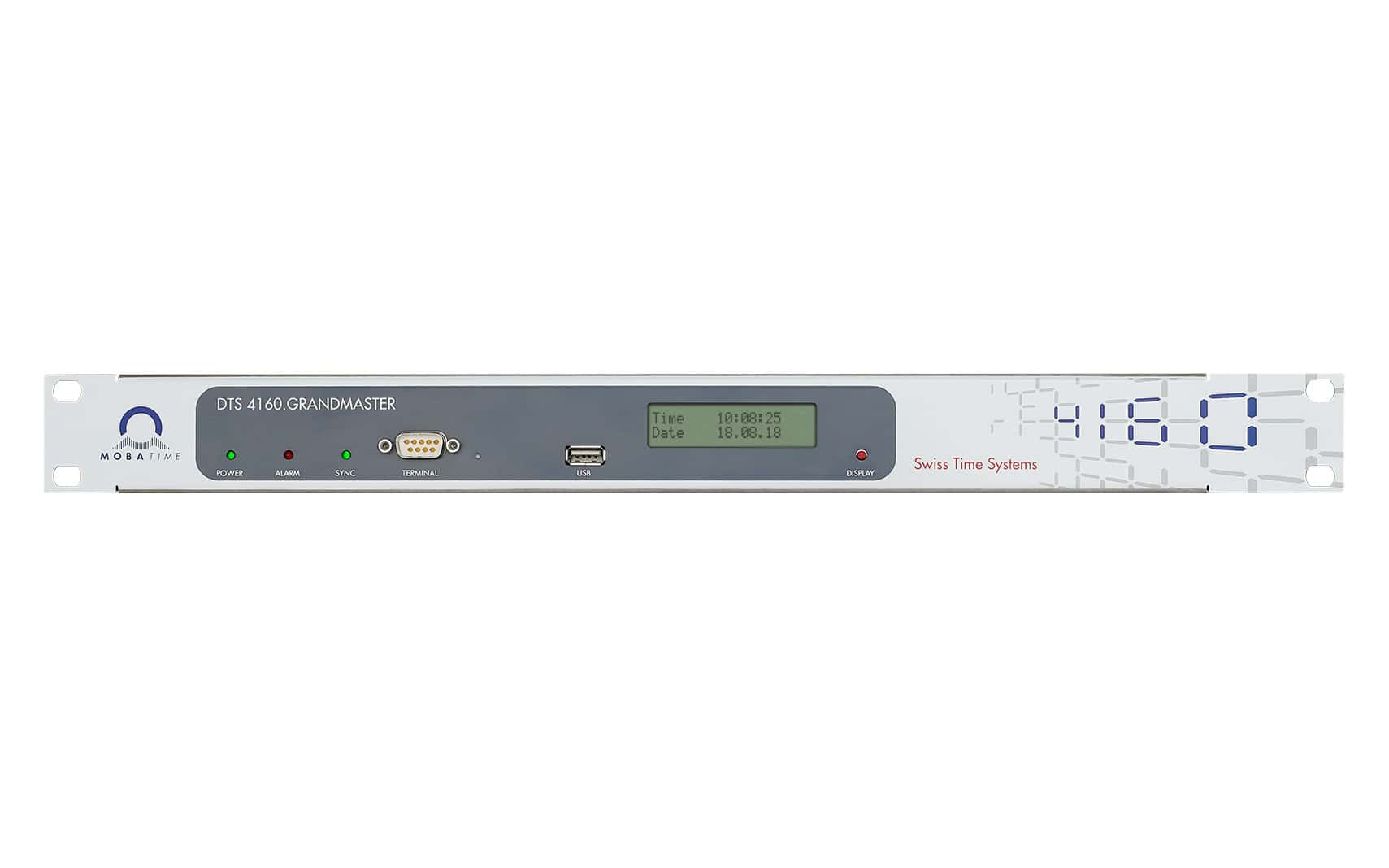
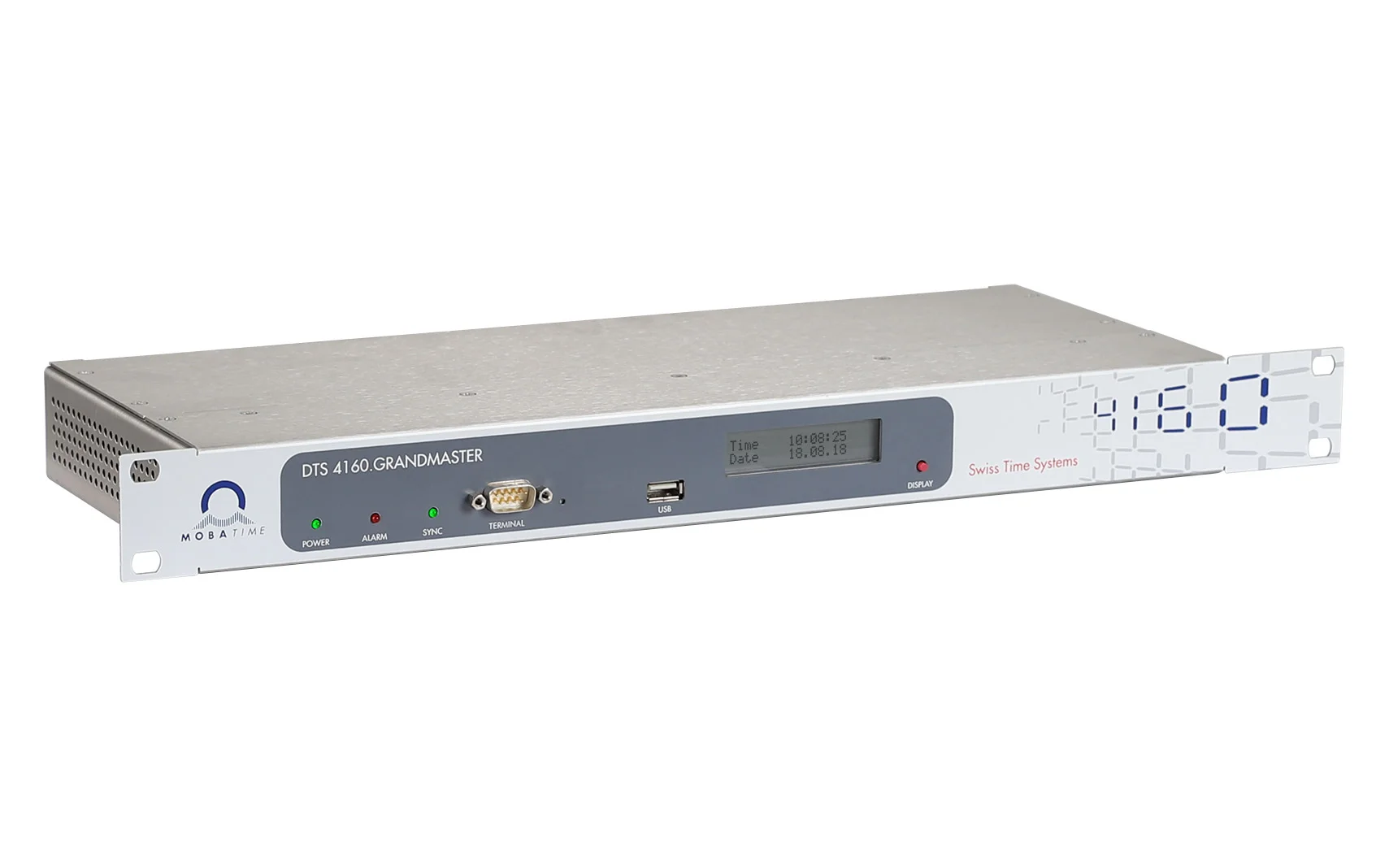
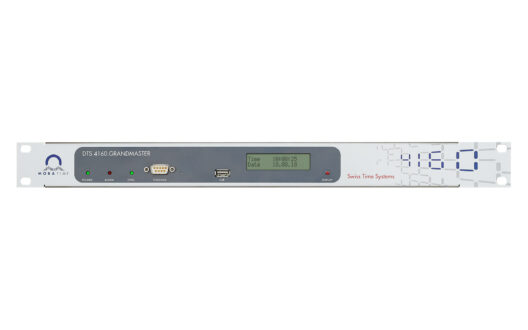
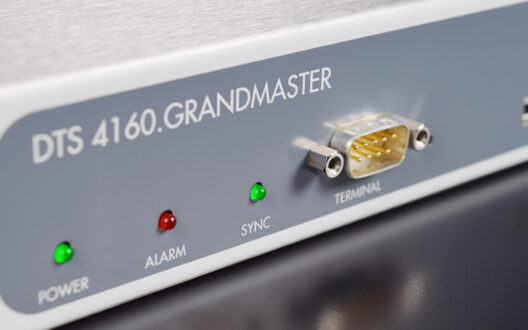
DTS 4160 is a combined time distribution and synchronization device with up to 4 network ports (IPv4/IPv6). It provides a time reference for PTP and NTP clients. With its high-precision and intelligent concept for redundant operation, it offers a high degree of reliability and availability

PTP GRANDMASTER
The DTS 4160 is a PTP grandmaster according to IEEE 1588-2008 / PTPv2, with IEEE 1588-2019 / PTPv2.1 compability, for the synchronization of highly accurate clients. Usable for telecom (e.g. LTE), energy (e.g. smart grid), automation etc.

HIGH-PERFORMANCE NTP SERVER
The DTS 4160 can reply to more than 10‘000 NTP and SNTP requests per second (up to 600‘000 clients depending on NTP client configuration).

REDUNDANT LINK
For utmost availability, two DTS 4160 can be connected to offer redundant master-slave operation with automatic switch over in case of an error. A redundant power supply is also possible.

GNSS RECEIVER
The DTS 4160 can receive all GNSS L1 systems (GPS+QZSS/SBAS, Galileo, GLONASS, BeiDou). Additional IRNSS/NavIC L5 support available on request.

GNSS SECURITY MONITORING AND SIGNAL FIREWALL
With the optional one-time licensed GNSS security feature, the DTS 4160c (Rubidium) integrates GIDAS Embedded to provide robust RF-layer protection. The system detects GNSS anomalies, including jamming and spoofing attempts, in real time, blocking compromised signals and ensuring secure, reliable timing for critical infrastructure.

NETWORK SERVICES
The DTS 4160 offers state-of-the-art network services such as VLAN, link aggregation and static routing.

OSCILLATOR OPTIONS
The DTS 4160 offers different oscillator options for advanced holdover performance.

LEGACY OUTPUTS
The DTS 4160 supports legacy outputs such as IRIG, E1, DCF etc.

Show more
Oscillator type:Rubidium / OCXO
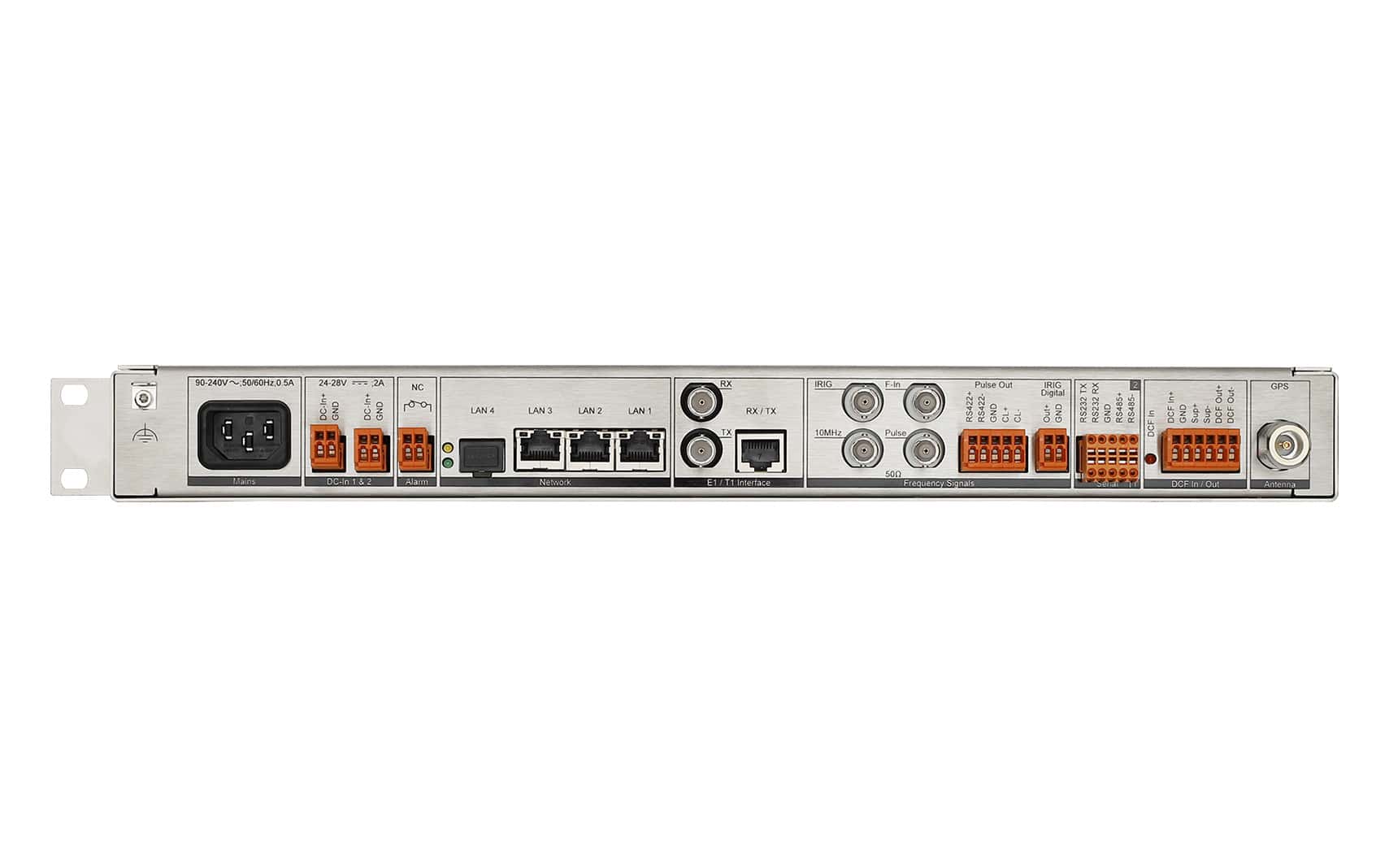
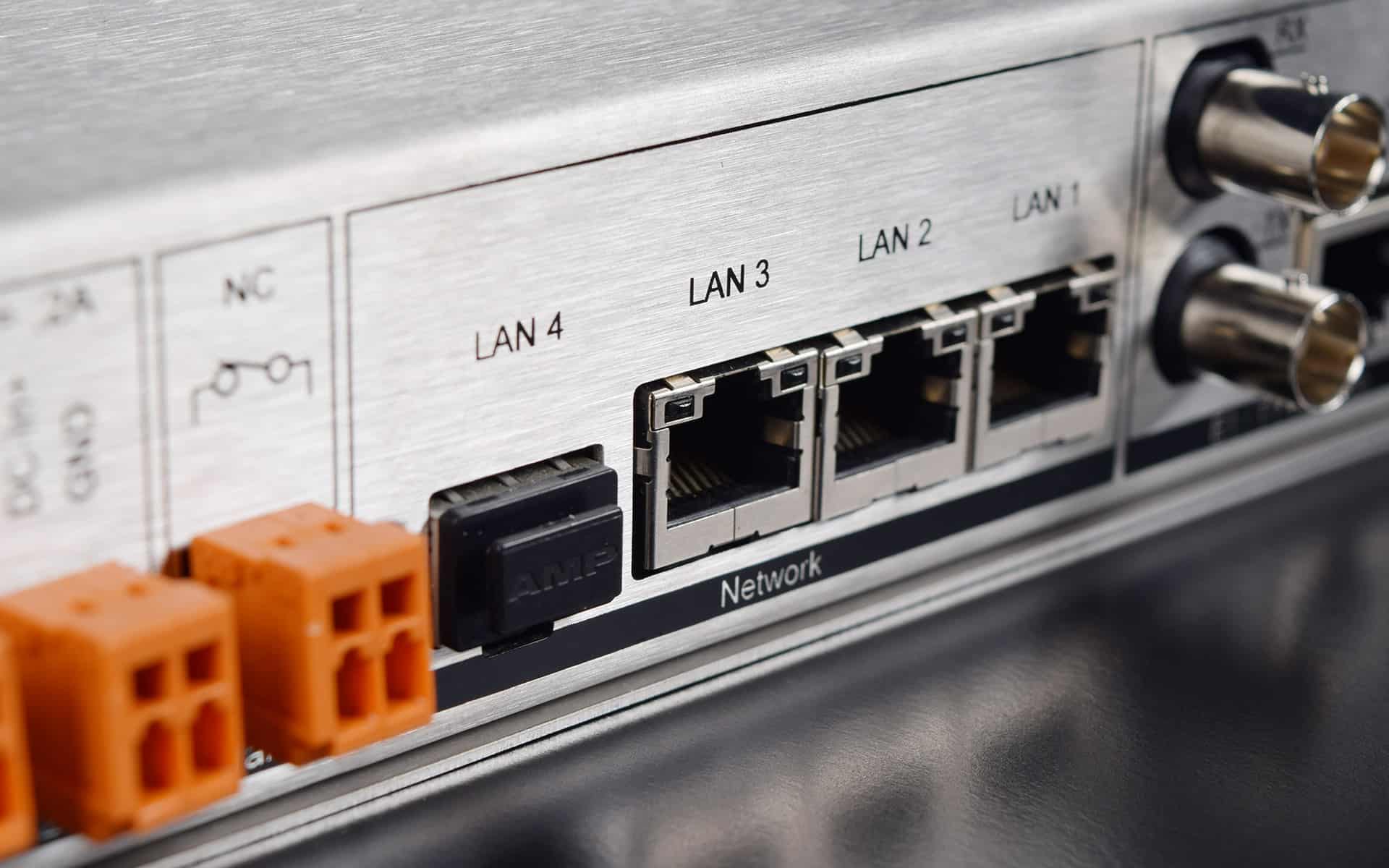
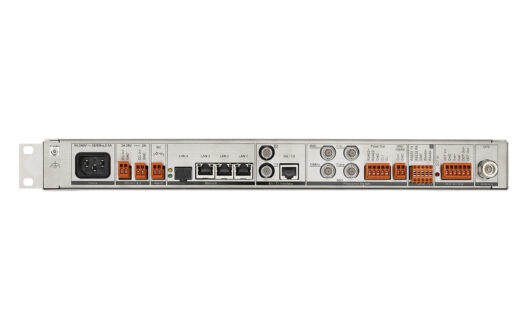
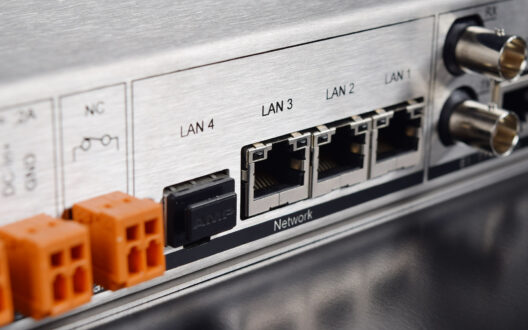
4 completely separated LAN ports (3x RJ45, 1x SFP):provides PTP on 3 ports 1- and 2-step master or slave, different profiles and domains per port, multicast/unicast, IPv4/IPv6/Layer 2, provides NTP on 4 ports (<10'000 requests/s on all 4 ports combined)
Outputs:1x E1 RJ48 (balanced) or BNC (unbalanced), 2x pulse/frequency/10MHz outputs, 1x IRIG-B / AFNOR, 2x serial output, 1x DCF current loop output
GNSS Receiver:GNSS L1 systems (GPS+QZSS/SBAS, Galileo, GLONASS, BeiDou). Additional IRNSS/NavIC L5 support available on request.
Redundancy:master-slave operation with automatic switch over in case of an error
Show more
IP configDHCP, DHCPv6, static IP, Autoconfiguration
Power supply90–240 VAC or 80–240 VDC, 0.5 A; 2x 24–28 VDC, 2 A (redundant, monitored)
AccuracyGNSS to internal time: < +/- 30 ns, Redundant connection to internal time: < +/- 50 ns, PTP to internal time: < +/- 200 ns, DCF to internal time (with GNSS 4500): < +/- 200 ns (after compensation for fix offset)
OperationMOBA-NMS, Telnet, SSH, SNMP (V1/V2c/V3 get, put), RS 232 (terminal)
Show more

Both, PTP and NTP provides time synchronization over a packet based network. But not both protocols are dedicated to the same application fields. It depends on the system’s needs, which of the protocol is preferred.

PTP is needed where a higher level of precision is required (e.g. Telecom, Power distribution, Air traffic control etc.) With PTP sub microsecond or even nanosecond accuracies are feasible, whereas NTP only reaches millisecond level. The key of PTP is hardware timestamping. Only if the timestamping happens close to the wire, it is possible to reach this high level of accuracy. The drawback of it is the need for dedicated hardware and an engineered network.

NTP is an old Internet protocol which is still widely used to distribute time (e.g. clock systems or IT Networks). NTP provides a simple way to synchronize all device over a regular network and even over internet. To ensure a reliable time in a local network, the best solution is to place an NTP server, which is connected to a GNSS Antenna, into the network. Whereas time is needed for clocks, access control systems and other such systems the accuracy of NTP is sufficient. The benefit of NTP is it’s robustness and it’s ability to run on a standard IT equipment.

If you need further information on this topic, please do not hesitate to contact us. We would be pleased to support you.

PTP is the “Precision Time Protocol”, which is defined in IEEE 1588. In contrast to NTP, this is a network protocol, which is characterized by significantly higher accuracies (down to the nanosecond range) and is usually used in locally limited networks (e.g. measurement / control / regulation technology, automation technology, etc.).


In the foreground is not the absolutely correct time information, but rather the high-precision “clocking” of interconnected devices in such industrial or computer networks. In connection with the PTP network organization and clock types, one speaks initially of Grandmaster Clocks (best possible reference device) and Boundary Clocks (devices with master and slave function), whose role distribution is determined using the best Master Clock algorithm. On the other hand, clearly defined roles are assigned to the ordinary clocks (either as master or clients), so-called transparent clocks then only forward the PTP time stamp when corrected. The runtime correction is ensured using complex computing algorithms. So it is not the case that one procedure is to be replaced by the other: NTP and PTP have different functional focuses, which is why both will continue to have authorization in the future and can also be used in parallel in computer networks if necessary.

DTS 4160.grandmaster


GNSS stands for Global Navigation Satellite System, and is an umbrella term that encompasses all global satellite positioning systems. This includes several constellations of satellites orbiting over the earth’s surface and continuously transmitting signals providing an autonomous geo-spatial positioning with global coverage.

The GPS constellation (developed and controlled by the USA) is still the most widely used GNSS in the world but major countries have now developed their own constellation: Glonass (Russia), Beidou (China), and Galileo (Europe) with improved accuracy

GNSS is used in collaboration with GPS systems where all GNSS receivers are compatible with GPS, but GPS receivers are not necessarily compatible with GNSS.

A GPS receiver has been designed to receive the GPS constellation only (24 satellites) when GNSS-compatible equipment can use navigational satellites from other networks (each network is controlling between 24 and 30 satellites). It is therefore recommended to use GNSS receivers for positioning and timing applications.

Selected MOBATIME time servers can support IRNSS/NavIC L5 as an additional GNSS reception option.

For the DTS 4150.grandmaster and DTS 4160.grandmaster, IRNSS/NavIC L5 support is available on request. Both devices are designed for professional time distribution and synchronization and can receive the main GNSS L1 systems listed in the product leaflets, including GPS, Galileo, GLONASS and BeiDou.

Whether IRNSS/NavIC L5 is relevant for a specific project depends on the application, regional signal availability and system requirements. For this reason, we recommend checking the exact configuration and project conditions in advance.

IRNSS/NavIC is a regional satellite navigation system, while GPS, Galileo, GLONASS and BeiDou are global navigation satellite systems.

This means that NavIC is mainly designed to serve India and the surrounding region. In time synchronization projects, it can be relevant when regional GNSS availability, project specifications or local requirements need to be considered as part of the overall synchronization concept.

GIDAS Embedded is a GNSS interference detection system developed by OHB Digital Solutions and integrated into selected MOBATIME time servers such as the DTS 4160c (Rubidium) and DTS 4210.timecenter. It continuously monitors the quality of received GNSS signals and detects threats like jamming or spoofing.

If degraded or manipulated signals are identified, GIDAS Embedded immediately raises an alert and ensures the time server does not use compromised data. This prevents the distribution of false or inaccurate time information, making it a key component for enhancing the resilience and security of time synchronization in critical environments.

PTP profiles are standardized sets of configuration parameters tailored to specific industries or use cases. For example:

  • The Power Profile (IEC 61850-9-3) is used in substations and utility automation, prioritizing reliability and deterministic behavior.
  • The Telecom Profiles (ITU-T G.8275.1 and G.8275.2) are used in mobile networks for phase and frequency synchronization.

These profiles ensure interoperability and simplify deployment within each domain.

The Precision Time Protocol (PTP), defined by IEEE 1588, is a network protocol that synchronizes clocks throughout a network with sub-microsecond accuracy. It is critical in applications where precise timing is essential, such as energy systems, industrial automation, financial trading, and broadcasting. PTP achieves this high accuracy through hardware timestamping and delay compensation techniques.